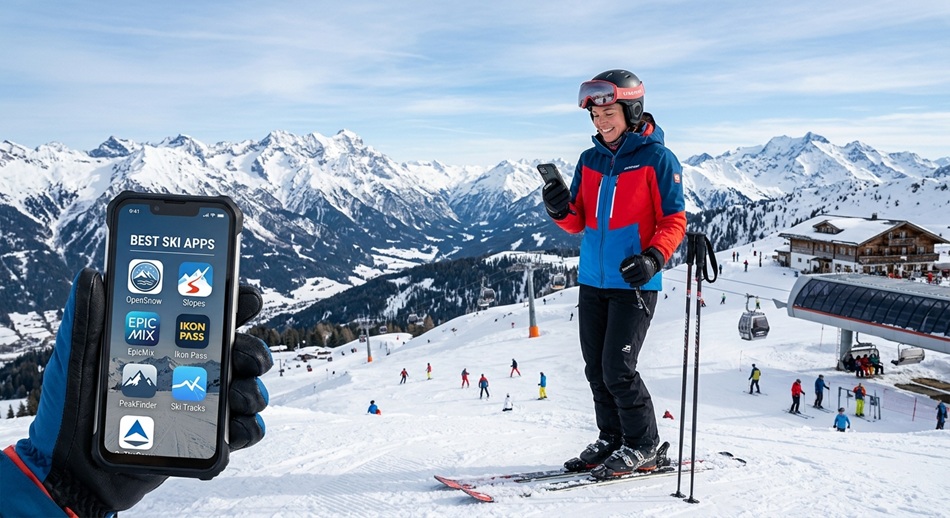
OnTheSnow is the best all-around ski app for most people, since it’s the world’s most downloaded ski app and pulls live snow reports from reporters at resorts worldwide, but if you want GPS run tracking, stats, and trail maps instead of conditions, Slopes is the better pick. Most serious skiers end up running two apps at once: one for conditions and planning, one for tracking the day itself. Here’s how to figure out which combination is actually right for you.
I learned this the annoying way, showing up at a resort with a beautiful powder forecast from a generic weather app that had no idea the upper lifts were on wind hold. Ski apps solve a genuinely different problem than regular weather apps: they’re built around resort-specific data, groomed run status, and lift operations, not just a temperature and a cloud icon.
What actually matters in a ski app
Before getting into specific apps, it helps to know that “ski app” actually covers three genuinely different jobs: telling you where and when conditions are good, tracking your actual runs once you’re on the mountain, and handling the logistics of your pass (tickets, reservations, parking). Almost no single app does all three well, which is why most serious skiers end up with two apps running, not one.
OnTheSnow: best for conditions and trip planning
OnTheSnow pulls real-time snow reports from a global network of resort reporters, covering base depth, new snowfall, and which lifts and runs are actually open. If you’re deciding where to ski this weekend or whether it’s worth the drive, this is the app that answers that question with real data instead of a generic forecast. It also covers thousands of resorts worldwide, so it works as well for a quick regional check as it does for planning a trip somewhere you’ve never skied before.
Limitation: OnTheSnow is a planning tool, not a tracking tool. It won’t tell you anything about your own day once you’re actually on the mountain.
Slopes: best for tracking your day on the mountain
Slopes turns your phone into a GPS tracker for skiing and snowboarding: run count, vertical feet, top speed, and a full map of every run you took, layered over digital trail maps. It also has social features like leaderboards and friend-finding on the mountain, which matter if you ski with a group and keep losing each other at the lift line. The trail maps are crowd-sourced and detailed enough that you can review exactly which named run you skied, not just a GPS squiggle.
Limitation: the full stat history, advanced trail overlays, and some social features sit behind a paid subscription after a limited free tier.
Ski Tracks: the simplest GPS tracker
Ski Tracks was one of the original ski-tracking apps and still does the core job well: stats, run history, and a clean interface without Slopes’ social layer. If you just want your numbers, runs skied, vertical, speed, without leaderboards or a social feed getting in the way, it’s a lighter, more focused option that’s stayed relevant for years for exactly that reason.
FATMAP: best for off-piste and backcountry
FATMAP specializes in detailed 3D terrain maps, which matters a lot more once you’re skiing off-piste or touring than it does on groomed resort runs. It shows slope angle, aspect, and terrain features in a way flat 2D trail maps simply can’t, which is genuinely useful information when you’re deciding whether a line is safe, not just scenic.
Limitation: its resort-skiing features are thinner than Slopes or Ski Tracks; FATMAP earns its keep specifically once you’re heading off marked runs.
Maprika: best for staying connected with your group
Maprika is built around a specific problem: losing your group on a big mountain. It lets you set and share rendezvous points, see where everyone in your party actually is in real time, and track and review the runs you’ve completed, all layered onto a live map rather than relying on text messages that may not send from a lift line with weak signal.
Epic Pass and Ikon Pass apps: for pass holders specifically
If you hold an Epic Pass or Ikon Pass, the resort group’s own app is worth installing regardless of what else you use. They handle lift ticket scanning, reservation requirements at busy resorts (several Epic and Ikon resorts now require advance reservations on peak days), and pass-specific perks that a third-party app simply can’t surface, since only the pass issuer has that data.
Strava: worth it if you already track other sports
If you’re already using Strava to track running, cycling, or other activities, it supports skiing and snowboarding as an activity type too, logging your runs alongside everything else in one unified history. It’s not built specifically for skiing the way Slopes is, so you lose some ski-specific detail, but the convenience of one app for all your activity tracking is real if that’s already your habit.
Carv: best for actual coaching, not just tracking
Carv goes further than any tracking app on this list by giving you real-time coaching feedback on your technique, using sensors built into custom insoles rather than just GPS. It’s the right pick specifically if your goal is improving how you ski, not just logging that you skied, though it requires buying dedicated hardware (over $200) rather than being a free app download.
OpenSnow: best for detailed, forecaster-written weather analysis
OpenSnow’s forecasts are written by actual meteorologists specializing in mountain weather, going deeper into storm timing and snow quality than a generic snow report does. It’s a strong companion to OnTheSnow specifically for trip planning further out, when you’re deciding which weekend to go, not just checking today’s conditions.
Cairn: best for safety and cell coverage awareness
Cairn maps cell coverage in mountain and backcountry areas and can automatically alert your emergency contacts if you don’t check in as expected. It’s less about the skiing itself and more about the safety layer around it, worth adding specifically if you ski remote terrain with unreliable signal.
4riders: best for a social, community-driven trail experience
4riders leans into the social side harder than most trackers, with crowd-sourced trail conditions and a community feed alongside its GPS tracking, closer to a social network for skiers than a pure stats tool.
How to pick the right combination
- Mostly resort skiing, want to know before you go: OnTheSnow for conditions, plus your resort’s own pass app for tickets and reservations.
- Care about your stats and want to track every run: Slopes, or Ski Tracks if you don’t need the social features.
- Backcountry or off-piste skiing: FATMAP for terrain, alongside a tracking app for your own safety record.
Frequently asked questions
What is the best free ski app?
OnTheSnow and Ski Tracks are both fully usable for free, covering conditions and basic run tracking without a paywall. Slopes offers a free tier too, though its full stat history and some social features sit behind a subscription.
Do ski apps work without cell service on the mountain?
GPS tracking apps like Slopes and Ski Tracks work offline once the trail maps are downloaded, since GPS itself doesn’t need a data connection. Condition apps like OnTheSnow need a connection to pull live updates, so download what you need before you lose signal.
Can I use a ski app to find my friends on the mountain?
Slopes has built-in friend-finding and group tracking, which is the most reliable way to locate people in your group without relying on text messages that may not send from the lift.
Which ski app has the most accurate snow reports?
OnTheSnow’s strength is specifically its network of human snow reporters at resorts, which tends to be more reliable than automated forecasts for same-day conditions like fresh powder or icy patches.